
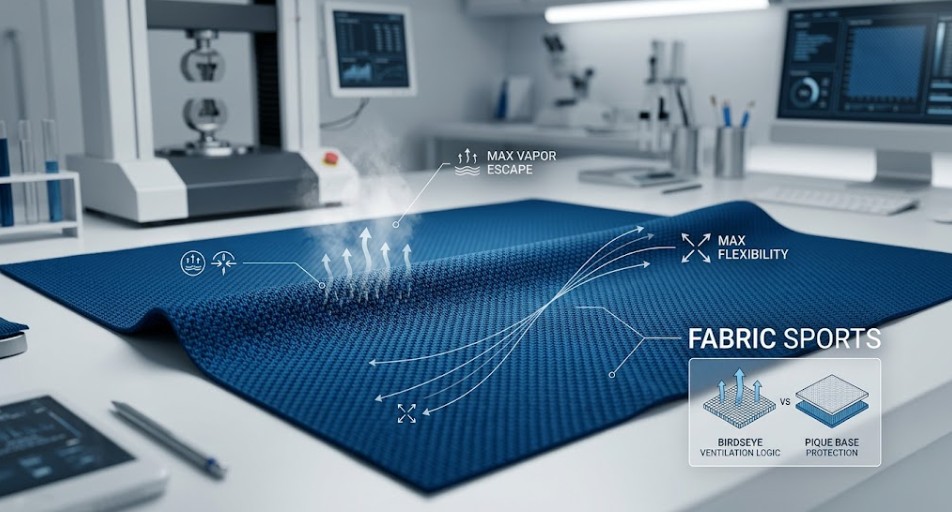
Sourcing premium athletic textiles requires selecting engineered synthetic knits that optimize moisture clearance while maintaining structural durability under intense physical duress. Procurement professionals regularly encounter severe product quality drop-offs when sourcing substandard wholesale textile shipments because low-grade synthetic yarns lack the foundational molecular architecture required to resist intense physical tension during high-velocity track training sessions. This material failure regularly agitates corporate apparel operations because active athletes experience immediate fabric clinging, heavy sweat pooling, and skin irritation that ultimately triggers high product return rates and compromises retail brand authority among competitive international distributors. Sourcing high-specification fabric sports materials provides an effective remedy by deploying specialized circular-knitted panel networks featuring advanced geometric stitch layouts engineered specifically for modern elite athleisure collections.
1. Why Does Fabric Sports Selection Impact Run Team Lines?
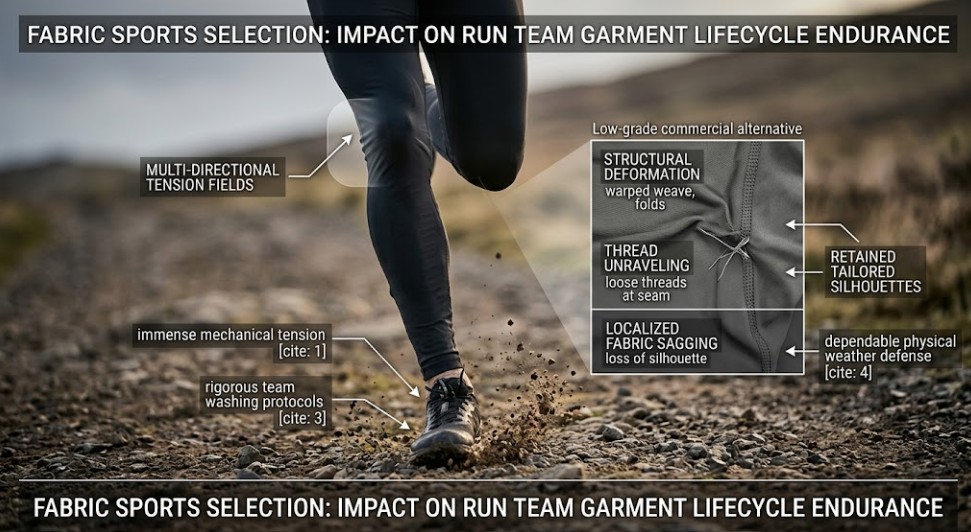
Selecting premium fabric sports solutions dictates garment lifecycle endurance because running apparel faces continuous multi-directional friction and immense mechanical tension fields during outdoor field trials. Clothing manufacturing firms must prioritize technical yarn specifications over basic cost configurations to safeguard their corporate clients from premature apparel degradation during competitive athletic matches. Low-grade commercial alternatives frequently exhibit structural deformation, thread unraveling, and localized fabric sagging because they lack the necessary structural density parameters to endure rigorous team washing protocols. Integrating high-gauge knitted panels ensures that finished sportswear lines retain their original tailored silhouettes while providing dependable physical weather defense across harsh training environments.
What Causes Rapid Material Degradation?
Standard stitched activewear frequently suffers from structural failure when subjected to high-velocity body movements because rigid thread lines lock up under intense tension fields. Here’s the deal regarding long-term textile endurance since structural consistency directly dictates brand reputation across modern commercial distribution networks. When low-quality yarn configurations experience continuous sweat saturation, their synthetic bonds weaken significantly, causing the material to warp and lose its natural compression values.
- Low-grade polymer filaments exhibit poor resistance against sudden abrasive forces.
- Non-stabilized knit configurations suffer from severe torque and structural twisting.
- Intensive moisture retention accelerates the breakdown of chemical finishing treatments.
Can Clean Geometric Knits Protect Brand Image?
Utilizing precisely calibrated circular knitting arrangements helps international apparel distributors secure predictable product parameters that successfully withstand intense mechanical testing. You might be wondering how specialized processing techniques protect growing clothing catalogs from negative consumer reviews over multi-year product lifecycles. Advanced texturing methods eliminate loose structural fibers entirely, which prevents ugly pilling defects from manifesting across high-friction zones like underarms and side panels. Sourcing flat, high-density rolls enables garment assembly plants to optimize their cutting patterns while minimizing material waste margins during large-scale manufacturing runs.
- Micro-knitted surfaces offer smooth textures that minimize painful skin chafing.
- Controlled yarn tension prevents vertical stitch distortion faults during production.
- Uniform structural density maximizes automatic cutting blade efficiency in factories.
Key Takeaway: Prioritizing high-density technical knits protects your sportswear brand from costly product recall liabilities while ensuring that competitive athletes receive reliable, wear-resistant apparel assets.
| Material Longevity Vector | Standard Flat Jersey | Technical Circular Knit |
| Abrasion Resistance Index | Low Friction Threshold | High Durability Rating |
| Tensile Hold Strength | Warps Under Heavy Stress | Retains Shape Parameters |
This technical breakdown clearly illustrates how advanced manufacturing methods yield superior wear resistance compared to legacy fabric setups.
2. How Does Birdseye Fabric Sports Structure Maximize Airflow?
A birdseye knit configuration maximizes airflow by deploying a uniform network of miniature diamond-shaped micro-recesses across the entire textile surface. This engineered pattern layout acts as an automated system of ventilation exhaust ports that pulls warm, damp air away from active skin surfaces before heavy sweat condensation can accumulate inside garment panels. Sourcing this technical fabric sports option helps international apparel buyers manufacture lightweight training shirts that maintain excellent breathability metrics during high-velocity cardio workouts. Choosing these specialized geometric micro-recesses prevents the uncomfortable suffocating sensation common in legacy synthetic activewear collections.
Why Do Micro Recesses Prevent Condensation?
The continuous layout of diamond dimples reduces direct fabric contact against human skin, which fundamentally limits the occurrence of wet material clinging during intense exercise. What’s the real story regarding real-time air exchange in performance garments since thick, unvented textiles frequently trap dangerous humidity zones against active muscle groups? These specialized geometric channels facilitate rapid, continuous air circulation, allowing external breezes to cool the body core while driving out trapped metabolic heat vapor. Sourcing pre-stabilized birdseye configurations ensures that these vital ventilation pathways remain fully open even after undergoing heavy mechanical compression during automated packing.
- Diamond-shaped micro-recesses form natural paths for rapid vapor escape.
- Low physical surface contact minimizes uncomfortable wet fabric clinging risks.
- Porous knit spacing speeds up continuous atmospheric air circulation metrics.
Can Open Stitch Layouts Keep Garments Light?
Integrating open geometric stitch configurations allows textile engineers to reduce the raw material weight per square meter without compromising final fabric burst resistance. This is where it gets interesting because maintaining a featherlight profile allows competitive field athletes to conserve vital physical energy during intensive long-distance track workouts. The specialized distribution of yarn mass yields a porous matrix that actively resists water weight retention even during heavy rain storms. Garment factories receive perfectly flat panels that maintain dimensional stability, allowing for seamless integration into high-volume activewear assembly setups.
- Reduced material mass eliminates unnecessary structural garment weight for runners.
- High porosity metrics facilitate rapid drying times after intense exertion.
- Balanced structural design maintains excellent tensile recovery across panels.
Key Takeaway: Specifying birdseye geometric knits ensures your running apparel lines deliver maximum breathability, which directly prevents sweat accumulation and elevates athletic comfort.
| Ventilation Metric | Standard Solid Fabrics | Birdseye Micro-Porous Base |
| Air Permeability Rate | Restricted Internal Airflow | Maximum Vapor Venting Output |
| Fluid Evaporation Speed | Prolonged Moisture Retention | Rapid Continuous Clearance |
This performance matrix demonstrates how micro-recess geometries provide superior ventilation parameters compared to dense, non-structured textiles.
3. What Makes Pique Fabric Sports Options Durable for Outerwear?
A premium pique fabric option delivers exceptional durability for performance outerwear by utilizing raised geometric parallel cords that create a robust, abrasion-resistant surface profile. This structural composition protects the exterior garment face from rough physical friction against abrasive fitness gear or rugged outdoor trail obstacles easily. Sourcing this heavy-duty fabric sports material enables design teams to manufacture high-end sports apparel like winter golf pullovers or technical hiking layers. The substantial physical weight of the pique structure signals premium manufacturing quality to commercial activewear procurement managers operating across international distribution channels.
Why Do Parallel Cords Resist Abrasion?
The raised geometric rib arrangement effectively deflects direct surface friction, which minimizes the risk of severe yarn snagging or surface tearing faults over time. Ready for the good part concerning robust material engineering since premium outdoor activewear must regularly endure intense physical punishment during competitive contact sports tournaments? This specialized structural depth ensures that the primary yarn matrices remain perfectly safe from localized mechanical breakdown even after years of continuous usage. Apparel distribution firms utilize these rugged parameters to justify higher wholesale price points when pitching new seasonal outerwear collections to premium retail buyers.
- Raised parallel cords create a substantial protective exterior shield layer.
- Textured construction prevents surface snagging when friction forces occur.
- Robust yarn placement minimizes the occurrence of localized material thinning.
Does Structural Depth Improve Quality Perception?
The substantial tactile texture of a premium pique pattern provides a high-end hand feel that immediately communicates structural integrity and luxury tailoring standards. You might be wondering if changing from a basic flat knit to a multi-dimensional corded texture alters consumer brand loyalty metrics within competitive retail spaces. The structured profile holds its shape perfectly under tension, which prevents finished jackets from sagging or looking worn out after multiple commercial laundry washing cycles. Sourcing these heavy-weight options enables clothing businesses to expand their catalogs into the lucrative premium activewear market segment with complete confidence.
- Substantial physical fabric weight supports structured garment collar designs.
- Multi-dimensional textures preserve crisp aesthetic definition after heavy laundering.
- Premium tactile characteristics increase the perceived retail value of sportswear.
Key Takeaway: Choosing robust pique knit structures provides your performance outerwear collections with the rugged wear resistance needed to survive harsh outdoor sports environments.
| Durability Indicator | Standard Lightweight Knits | Robust Pique Corded Base |
| Surface Friction Tolerance | Minimal Abrasion Defense | High Structural Wear Resistance |
| Geometric Shape Retention | Prone to Localized Sagging | Retains Crisp Structural Lines |
This structural comparison matrix highlights how parallel cord geometry optimizes material lifespan parameters for heavy-duty activewear.
4. How Do Geometric Knits in Fabric Sports Manage Sweat Vapor?
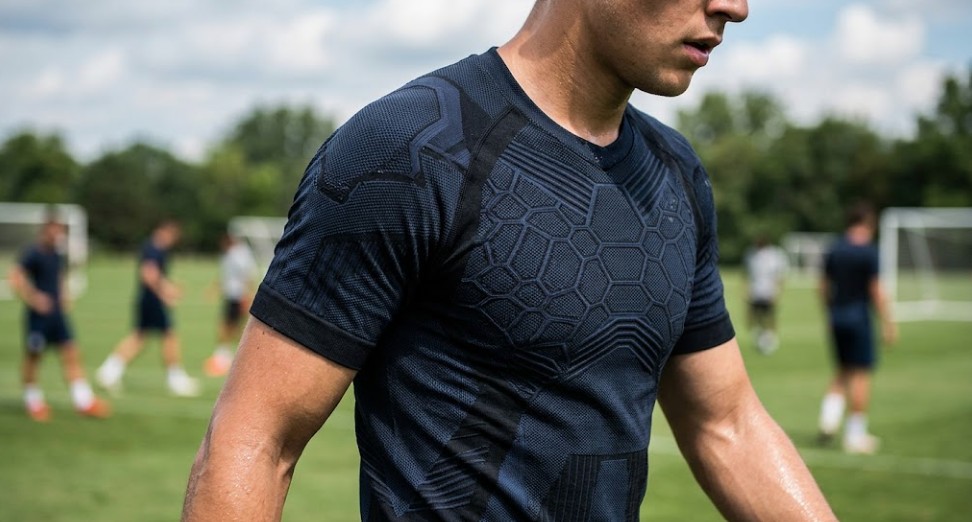
Advanced geometric knits manage sweat vapor efficiently by pairing hydrophobic interior filament layers with hydrophilic exterior surface faces to accelerate capillary fluid transport. This specialized technical fabric sports setup pulls liquid moisture away from active sweat glands instantly, preventing dangerous humidity pooling against human skin during field workouts. Sourcing these multi-layer technical combinations helps apparel manufacturing firms construct high-performance team uniforms that dry exceptionally fast under humid conditions. Maintaining a perfectly dry inner garment microclimate is vital for protecting athletes from rapid muscle cooling and post-exercise discomfort.
How Does Capillary Transport Move Fluid?
The narrow physical spacing between the multi-layered synthetic filaments generates a strong capillary pulling force that actively draws moisture upward against gravity. What’s the real story behind advanced fluid management systems since primitive materials regularly absorb sweat molecules, causing garments to become damp and heavy? Advanced polymer surfaces are treated with functional hydrophobic coatings that refuse to retain liquid within the central core of the yarn structure. This resistance forces sweat to travel rapidly along the outer surfaces of the fibers toward the exterior face where it can evaporate into the atmosphere.
- Narrow fiber spacing generates high continuous capillary pulling forces.
- Hydrophobic fiber properties prevent internal water absorption defects entirely.
- Structured moisture pathways accelerate fluid relocation away from skin.
Can Rapid Drying Prevent Performance Drops?
Evaporating sweat quickly prevents the accumulation of cold surface moisture, which directly minimizes rapid post-exercise body temperature drops among outdoor fitness enthusiasts. But here’s the kicker because a wet, heavy garment forces an athlete’s body to expend critical physical energy simply trying to regulate core warmth levels. Utilizing advanced moisture-wicking synthetic composites guarantees that the user skin microclimate remains warm and dry immediately after intensive training sessions end. Your purchasing department will find that sourcing these high-performance textiles completely eliminates consumer complaints regarding heavy, wet workout gear.
- Rapid fluid clearance minimizes sudden post-workout core heat drops.
- Dry inner linings reduce the risk of skin chafing.
- Lightweight dry garments conserve physical energy during training sessions.
Key Takeaway: Sourcing advanced capillary-action fabrics protects your athletic end-users from post-exercise muscle tightness while ensuring consistent comfort metrics across your activewear lineup.
| Fluid Management Scale | Standard Non-Wicking Linings | Capillary Action Synthetics |
| Liquid Saturation Metric | High Internal Moisture Trapping | Negligible Fluid Retention |
| Drying Turnaround Velocity | Prolonged Multi-Hour Drying | Rapid Accelerated Evaporation |
This data compilation demonstrates why prioritizing structured capillary transport channels prevents dangerous moisture pooling during intense exercise.
5. Which Fabric Sports Base Pattern Offers Prettier Hand Feel?
The smooth, silk-like texture of a birdseye birdseye fabric base pattern offers a softer, more comfortable hand feel that is perfect for lightweight, next-to-skin activewear layers. Evaluating which fabric sports base option satisfies your design requirements requires analyzing the specific touch preferences of your target consumer demographic. While birdseye options deliver a smooth finish that minimizes friction across sensitive skin areas, pique bases provide a rich, substantial texture that buyers associate with durable corporate sportswear. Sourcing both geometric alternatives from a vertically integrated factory allows procurement managers to balance their product catalogs effectively.
When Is Ultra Smooth Softness Required?
Lightweight running shirts and competitive athletic singlets require an incredibly smooth interior texture to eliminate the risk of friction rash during repetitive joint movements. Here’s the deal regarding premium next-to-skin garment design since high-performance athletes refuse to wear stiff, scratchy materials during high-velocity training matches. The flat, uniform layout of a birdseye micro-knit glides effortlessly against the human body, ensuring complete physical comfort over extended exercise periods. Selecting this gentle base style helps your activewear business secure excellent consumer product reviews and build long-term brand loyalty.
- Ultra-smooth surface textures eliminate friction rashes during long runs.
- Lightweight material profiles feel weightless against active muscle groups.
- High textile flexibility supports natural human biomechanical movements.
Does Textured Depth Signal Luxury Quality?
The alternating cord ribs of a classic pique knit present a distinct structural profile that communicates high-end tailoring values to retail clothing buyers. This is where it gets interesting when you compare how different surface patterns influence wholesale customer selection choices during seasonal product presentations. The tactile density of a premium pique fabric feels substantial and protective, making it the preferred choice for sophisticated corporate athleisure items like tennis shirts and warm-up pullovers. Procurement departments utilize this tactile variance to segment their apparel lines into clear value tiers that target separate market needs.
- Substantial textured cording delivers a premium weight profile.
- Structural depth holds shape parameters beautifully across high-stress panels.
- Distinctive geometric patterns enhance the visual appeal of sportswear.
Key Takeaway: Specifying smooth birdseye bases for high-velocity cardio garments and textured pique options for heavier outer layers allows your brand to satisfy diverse consumer comfort expectations perfectly.
| Touch Profile Matrix | Birdseye Base Geometry | Pique Base Geometry |
| Interior Tactile Texture | Ultra-Smooth Silk Softness | Textured Robust Parallel Cords |
| Ideal Product Placement | Next-to-Skin Agile Layers | Substantial Outer Performance Gear |
This tactile profile matrix shows how choosing specific geometric stitch layouts alters final product weight metrics and hand feel characteristics.
6. Why Do Fabric Sports Tensile Strengths Vary Across Knits?
Fabric sports tensile strengths vary across different knits because the interlocking stitch architecture and yarn density metrics dictate how mechanical loads are distributed across the textile matrix. Circular-knitted technical panels distribute pulling forces evenly across all coordinates, preventing localized fabric tearing faults when garments undergo extreme stretching during contact sports tournaments. Sourcing raw materials from a facility that utilizes computerized tension monitoring equipment ensures that every fabric roll exhibits uniform tensile hold parameters. This mechanical consistency is critical for preventing costly product quality failures across distant international retail marketplaces.
Why Do Interlocking Stitches Prevent Tears?
The looping configuration of circular knits allows the individual yarn strands to slide slightly and adjust to high physical tension fields without snapping. You might be wondering how an advanced performance textile can endure continuous physical punishment during intense athletic drills without experiencing seam breakdown or material separation over time. This architectural flexibility allows the finished jacket to expand and contract in perfect synchronization with real-time human joint movements. Partnering with a technically advanced mill guarantees that your garment factory receives perfectly stable panels that sew together easily during assembly operations.
- Interlocking knit structures distribute physical loads uniformly across panels.
- Flexible loop configurations prevent sudden yarn breakage under tension.
- High mechanical yield metrics support extreme range of motion requirements.
Can Laboratory Verification Secure Longevity?
Analyzing certified laboratory datasheets allows corporate clothing procurement managers to verify exceptional multi-directional bursting strength indices before signing major bulk procurement contracts. What’s the real story regarding structural quality assurance within the global apparel supply chain since substandard materials regularly fail under heavy match conditions? Quality control technicians utilize precise automated ball burst testing devices to calculate the exact structural load boundary of each production batch accurately. Securing documented compliance certificates ensures your raw materials satisfy modern global athletic wear requirements perfectly before manufacturing begins.
- Ball burst testing indexes confirm fabrics withstand over 450 Newtons force.
- Documented tensile parameters eliminate material failure risks during tournaments.
- Certified batch testing prevents premature garment breakdown across retail markets.
Key Takeaway: Sourcing fabric sports options with verified high burst strength parameters safeguards your corporate brand reputation while delivering the rugged structural endurance elite athletes expect.
| Load Resistance Vector | Legacy Lightweight Fabrics | Technical Interlocking Knits |
| Ball Burst Test Index | Low Structural Force Capacity | Exceeds 450 Newtons Resistance |
| Tension Failure Risk | Prone to Sudden Panel Tearing | Maintains Integrity Under Strain |
This technical specification dataset illustrates how selecting certified interlocking loop structures minimizes the risk of material failure under high physical stress.
7. Can Fabric Sports Geometric Grids Stop Garment Shrinkage?
Yes, utilizing a stabilized geometric grid layout inside your fabric sports material prevents post-wash shrinkage and eliminates internal insulation shifting entirely during domestic laundry cycles. Sourcing raw materials from a certified about us production facility ensures that the synthetic fibers undergo professional heat-setting stabilization to lock the structural dimensions firmly into place. This engineering precision ensures that finished activewear items retain their original tailored fitments and original thickness parameters after facing dozens of commercial launderings. Professional apparel buyers prioritize these dimensionally stable composites to avoid costly end-user returns that slice into retail store net profit margins globally.
Why Does Thermal Setting Lock Grid Dimensions?
Exposing the synthetic polymer matrices to controlled thermal setting procedures eliminates the internal structural stresses that naturally cause raw textiles to warp or contract when heated. Ready for the good part concerning advanced garment maintenance parameters since legacy activewear options frequently suffer from ugly padding bunching after a single domestic laundry cycle? The permanent multi-point anchorage created through computerized thermal lamination ensures that every single fiber strand remains locked within its geometric grid layout permanently. This structural stability ensures that the finished sportswear maintains a sleek, uniform profile throughout its entire consumer lifecycle.
- Controlled thermal setting eliminates post-wash fabric warping issues.
- Permanent fiber anchorage blocks internal padding movement pathways entirely.
- Stable grid coordinates preserve precise garment size dimensions permanently.
Does Uniform Anchorage Maintain Thickness?
Securing the internal polyester batting firmly across every square millimeter prevents the insulation from gathering into heavy, localized lumps when saturated with water. But here’s the kicker because unbonded insulation blankets quickly tear apart during the intense mechanical agitation of modern washing machine cycles, destroying the garment’s thermal performance uniformity. Advanced ultrasonic grid fusion ensures that the internal padding layer remains perfectly flat and functional, preserving consistent core warmth metrics for years. Sourcing pre-stabilized composites protects your retail customers from garment distortion complaints while securing dependable long-term apparel utility.
- Multi-point structural anchorage preserves uniform insulation thickness values.
- Fused synthetic batting matrices resist intense mechanical washing agitation.
- Stable thickness metrics ensure consistent thermal defense parameters endure.
Key Takeaway: Specifying thermal-stabilized geometric grid fabrics protects your wholesale clothing distribution firm from costly end-user product returns caused by post-wash garment shrinkage or insulation clumping.
| Care Stabilization Index | Unbonded Loose Linings | Stabilized Geometric Grids |
| Post-Wash Shrinkage Rate | Prone to Severe Material Distortion | Minimal Dimensional Shrinkage Score |
| Insulation Layer Security | Fails Under Mechanical Agitation | Retains Flat Uniform Anchorage |
This structured maintenance layout demonstrates how advanced thermal setting stabilization preserves original fabric parameters over extended consumer lifecycles.
8. How Do Buyers Evaluate Fabric Sports Weight Matrices?
Commercial activewear procurement managers evaluate fabric sports weight matrices by analyzing the Grams per Square Meter (GSM) values alongside specific multi-directional elongation parameters to match target athletic environments perfectly. Selecting the correct material weight ensures that the finished sportswear line provides adequate thermal defense without introducing redundant fabric mass that limits rapid joint movement. Sourcing mills utilize advanced technical testing procedures to document these precise physical metrics across massive production rolls destined for global athletic brands. Analyzing these certified weight metrics allows corporate development teams to build balanced, high-performance athleisure catalogs with complete accuracy.
Why Does GSM Dictate Seasonal Placement?
Lightweight fabrics falling between 135 and 180 GSM are ideal for high-velocity cardio lines, whereas heavier composites exceeding 280 GSM are mandatory for technical cold-weather outerwear layers. This is where it gets interesting when designing a comprehensive seasonal sportswear collection because picking the wrong material weight can completely ruin the market positioning of your product catalog. Calibrated mid-weight blends provide the necessary structural substance for transitional spring training gear, balancing breathability with light wind protection. Sourcing fabric from a large-scale manufacturer holding deep yarn stockpiles ensures that your contracted pricing models remain perfectly safe from market volatility.
- Low GSM values optimize vapor evaporation speeds for running gear lines.
- Mid-weight textile matrices support versatile transitional athleisure catalogs.
- High GSM composite layouts provide heavy-duty insulation for winter coats.
Can Weight Verification Prevent Assembly Bottlenecks?
Verifying that every production roll matches exact GSM specifications ensures that automatic cutting tables can partition fabric panels smoothly without experiencing alignment errors. Here’s the deal regarding high-volume garment assembly efficiency since variable density zones within a low-grade textile roll will cause severe fabric buckling under automated sewing heads. Advanced circular knitting equipment integrates real-time computerized feed sensors that adjust yarn delivery speeds instantly to ensure flawless structural uniformity across every bulk order. Sourcing pre-stabilized, uniform weight rolls ensures that your garment factory receives perfectly flat panels that assemble together easily.
- Uniform roll weight eliminates localized density variations during cutting.
- Computerized feed sensors guarantee consistent thickness parameters throughout.
- Flawless structural uniformity speeds up ultimate bulk production turnaround times.
Key Takeaway: Prioritizing verified GSM specifications enables your procurement department to select the exact material weight required for optimal athletic performance while maximizing factory assembly efficiency.
| Weight Matrix Classification | Lightweight Venting Range | Heavy-Duty Insulation Range |
| GSM Specification Limit | 135 to 180 Grams Per Meter | Exceeds 280 Grams Per Meter |
| Target Apparel Application | High-Intensity Cardio Apparel | Technical Cold Weather Outerwear |
This technical weight specification database establishes the measurable criteria required to select optimal materials for specific seasonal activewear applications.
9. Will Advanced Fabric Sports Lineups Protect Outdoor Runners?
Yes, utilizing an advanced seamless fabric sports lineup delivers a 100% sealed wind block that protects outdoor runners from freezing ambient drafts during field workouts. Computerized high-frequency ultrasonic laminating machines eliminate breakdown-prone sewing threads completely, fusing the synthetic layers into a single integrated composite structure that cannot unravel under heavy physical friction. This threadless construction preserves the full protective value of your technical face fabric without creating the thousands of tiny needle holes that naturally compromise legacy sewn panels. Sourcing these advanced acoustic laminates allows activewear companies to manufacture sleek, streamlined performance gear that withstands heavy wear cycles easily.
Why Do Sewn Seams Leak Warmth?
Standard stitched insulation layers rely on thousands of needle puncture points that act like tiny escape vents, allowing valuable trapped core warmth to dissipate into cold ambient air. You might be wondering why traditional quilted materials regularly fall short during technical alpine trekking excursions or high-velocity outdoor training drills. When rain storms occur during field matches, external water droplets penetrate these needle punctures easily, destroying the functional utility of waterproof outer coatings completely. Switching to advanced seamless lamination preserves a stable core microclimate by securing soft protective loft spaces without adding structural garment weight.
- Needle puncture points allow cold ambient wind drafts to penetrate garments.
- Stitched seams form natural failure pathways for external liquid water infiltration.
- Thread friction limits the natural omnidirectional extension of knit panels.
Does Acoustic Fusing Maximize Longevity?
Ultrasonic welding points fuse individual polymer matrices together at a molecular level, producing permanent high-strength bonds that never fray or snap under intense mechanical stress. What’s the real story regarding retail apparel return rates caused by broken sewing stitches across high-stress garment panels like shoulders and moving joint zones? Traditional sewing threads snag easily on rough outdoor objects or training equipment, causing entire quilted panels to unravel prematurely and ruin garment aesthetics. Threadless manufacturing profiles distribute localized physical stresses uniformly across the composite structure, ensuring that your activewear line looks pristine over extended lifecycles.
- Acoustic friction welding produces permanent high-strength fiber bonds.
- Computerized pattern rollers guarantee flawless geometric symmetry across rolls.
- Monolithic material structures eliminate the risk of surface snagging faults.
Key Takeaway: Sourcing seamless acoustically fused composites eliminates garment tear liabilities entirely while delivering top-tier windproof protection to elite outdoor athletes.
| Weather Defense Vector | Thread-Stitched Apparel | Ultrasonic Fused Composites |
| Seam Infiltration Rating | Compromised by Puncture Voids | 100% Sealed Air Block Shield |
| Longevity Profile Index | Prone to Snagging and Unraveling | Retains Crisp Modern Definition |
This functional matrix demonstrates that eliminating sewing threads completely removes the primary point of structural failure found in traditional winter gear.
10. Where Should Brands Secure Premium Fabric Sports Rolls?
Apparel brands achieve optimal supply chain security by sourcing premium fabric sports rolls directly from large-scale vertical manufacturing plants in China holding international quality certifications. Partnering directly with an authentic production mill cuts out expensive trading middlemen commissions while providing complete transparency regarding raw material compliance and chemical safety. Large manufacturing operations manage extensive machine fleets that guarantee consistent monthly output capacities during peak seasonal winter garment production rushes. Prioritizing manufacturing scale and technical depth allows your corporate activewear enterprise to navigate competitive retail markets with complete operational peace of mind.
Why Do Independent Certifications Matter?
Sourcing fabric from mills holding recognized OEKO-TEX Standard 100 credentials proves your materials are entirely free from dangerous chemical processing residues that cause skin irritation. Ready for the good part regarding international customs clearance since top-tier Western clothing markets now implement strict chemical tracing laws on incoming apparel shipments? This verified chemical safety protects your brand from costly product recalls and embarrassing customs rejections at international shipping ports. Furthermore, showcasing authentic Global Recycled Standard certification helps your corporate enterprise win lucrative supply contracts with modern eco-conscious sportswear firms.
- OEKO-TEX testing confirms complete absence of toxic textile residues.
- GRS validation guarantees authentic use of eco-friendly recycled yarn stocks.
- ISO quality compliance ensures predictable roll-to-roll production uniformity.
Does Massive Milling Infrastructure Protect Brands?
Choosing a primary manufacturer that operates a massive 10,000-square-meter facility equipped with dozens of active circular knitting machines guarantees your reorders get prioritized swiftly. This is where it gets interesting when an unexpected fashion trend drives a sudden surge in online consumer orders but your small trading supplier lacks machinery access to scale production. Large vertical mills maintain deep raw yarn stockpiles that insulate your business from sudden global material shortages and sudden price inflation spikes. Direct technical coordination accelerates custom fabric sample development times, allowing your purchasing department to scale production volume seamlessly.
- Large machine fleets eliminate downstream production bottlenecking delays.
- Deep yarn stockpiles protect contracted pricing models from market volatility.
- Direct technical coordination accelerates custom performance sample development times.
Key Takeaway: Sourcing your raw materials directly from an accredited large-scale industrial factory protects your supply chain from sudden delays while verifying global chemical safety compliance.
| Sourcing Variable Matrix | Middleman Trading Intermediary | Certified Large-Scale Vertical Mill |
| Infrastructure Fleet Power | Outsources to Unverified Sub-Shops | Owns 80 Circular Knit Systems |
| Monthly Output Volume | Restricted Batch Production Limits | Monthly 1 Million Kilos Capacity |
This B2B supplier comparison matrix demonstrates that direct mill integration yields far superior production flexibility and verified safety backing than basic trading intermediaries.
Strategic Synthesis for Advanced Textile Sourcing
Resolving complex cold-weather athletic apparel design challenges requires moving away from heavy traditional sewn materials and adopting advanced seamless technical composites that master warmth and multi-directional elasticity simultaneously. This article addressed critical bottlenecks regarding winter track gear failure parameters by highlighting the technical advantages of geometric micro-recess bases and acoustic lamination arrays. Our factory provides elite circular knitting and automated high-frequency ultrasonic lamination services to deliver premium performance fabrics tailored to international retail requirements. You can contact us today to request custom engineered fabric samples that match your specific regional weight and breathability requirements perfectly. Our corporate manufacturing vision focuses on driving international clothing innovation through sustainable certified production processes that empower growing activewear brands to achieve lasting commercial marketplace success globally.
Frequently Asked Questions
Q1: Can I use fabric sports options for high-velocity competitive training clothing lines?
Yes, it is highly suitable for elite athletic lines. Threadless ultrasonic bonding preserves the complete multi-directional stretch capacity of underlying circular knitted panels without the rigid shoulder restriction caused by traditional sewing lines during intense physical drills. Specifying lightweight birdseye foundations further ensures that your finished sportswear items maintain excellent panel ventilation metrics alongside rapid moisture clearance during extended training matches. Sourcing these high-stretch technical textiles eliminates consumer complaints regarding tight restrictive armhole fitments across global retail distribution chains.
Q2: What’s the best method to verify that a textile factory provides authentic recycled materials?
You must inspect independent transaction scope certificates carefully. Genuine premium manufacturing plants track incoming post-consumer plastic bottle stocks throughout the entire circular knitting and lamination process to supply transparent verification documents before bulk contracts are signed. Avoid trading agents who make unverified eco-friendly marketing claims without providing matching certified transaction receipts because international customs authorities require official documentation for green compliance tracking. Showcasing authentic Global Recycled Standard validation helps your corporate enterprise win lucrative supply contracts with modern eco-conscious sportswear firms globally.
Q3: How do I know if my chosen fabric composition will experience layer delamination after machine washing?
You should check verified laboratory peel strength scores beforehand. Top-tier industrial mills utilize computerized ultrasonic arrays that fuse synthetic matrices together at a molecular level to ensure permanent bonding integrity across heavy-duty washing cycles. Cheap composite fabrics produced on outdated flame-lamination machinery frequently experience inner batting blistering and peeling after facing only a few domestic laundry washings in retail settings. Sourcing fabric with verified high peel indices ensures your finished activewear merchandise maintains its uniform structural look throughout extended consumer lifecycles.
Q4: Can I customize the geometric pattern layouts across my technical garment faces?
Yes, custom roller configurations are fully available. Adjusting pattern dimensions allows your brand to optimize thermal resistance values and targeted body mapping zones by working directly with specialized manufacturing engineers during initial sample development phases. This structural adaptability allows your garment design team to place thicker lofted pockets over vulnerable muscle zones while keeping high-sweat areas highly breathable. Ensure you share your specific regional weather criteria and target fabric weight metrics with your mill’s textile engineering department.
Q5: What’s the best way to balance skin hand-feel with continuous panel breathability?
Selecting specialized base structures like birdseye or pique geometry is highly effective. Birdseye configurations utilize diamond-shaped micro-recesses to maximize rapid drying, while pique cording provides the rugged wear resistance needed for heavier outdoor performance outer layers. Birdseye geometry features tiny dimple zones that act as natural vapor escape channels which makes them ideal for lightweight high-velocity shirts. Conversely, the raised parallel cords of a pique structure provide a more substantial weight and rugged friction defense required for winter golf pullovers.